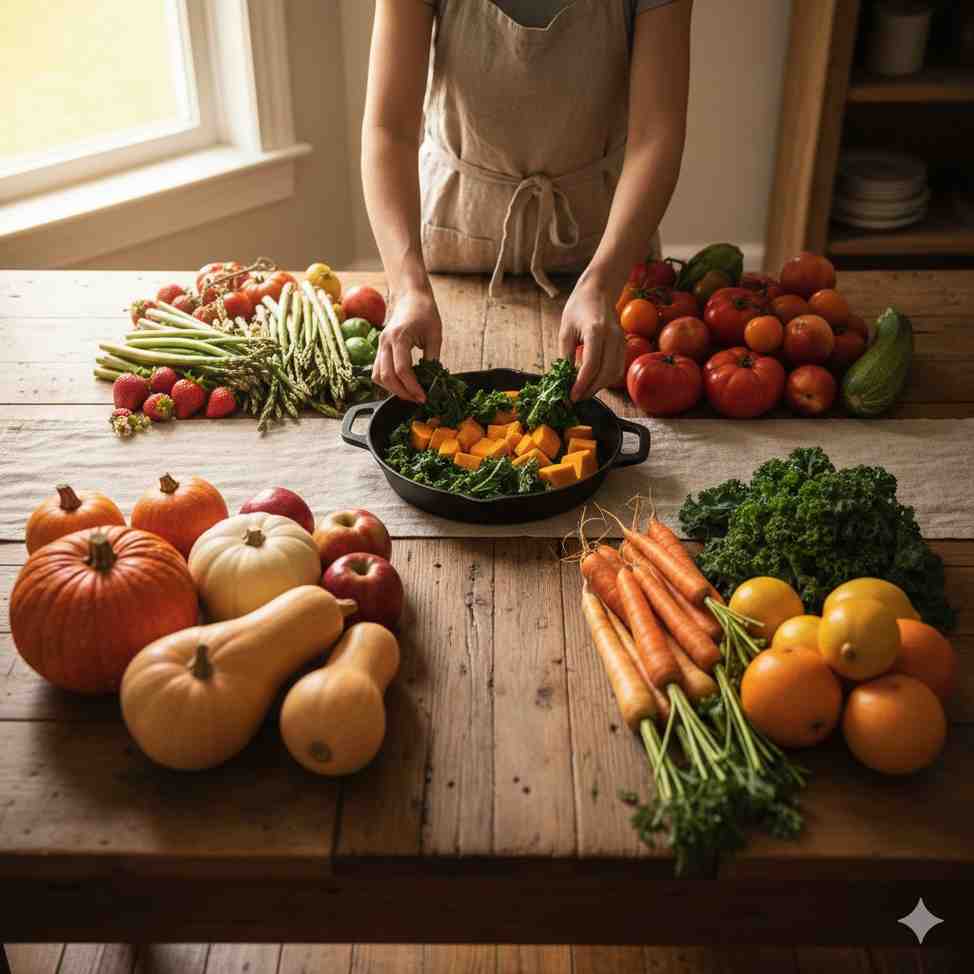
In an era of global food distribution, we've grown accustomed to finding strawberries in December and tomatoes year-round. Yet there's something profoundly satisfying—and beneficial—about returning to seasonal eating. Seasonal cooking reconnects us with nature's rhythms, offering peak flavor, maximum nutrition, and a more sustainable approach to food that honors both the environment and our bodies.
The Philosophy of Seasonal Eating
Seasonal cooking is the practice of choosing and preparing foods that are naturally harvested during the current season in your local region. This approach, which sustained humanity for millennia before modern transportation, aligns our diets with nature's cycles. Each season provides exactly what our bodies need: cooling, hydrating foods in summer; warming, grounding foods in winter; cleansing greens in spring; and preserving, hearty foods in autumn.
Beyond nutrition, seasonal eating creates a deeper connection to place and time. It encourages us to notice the subtle shifts in weather, to appreciate the fleeting nature of certain foods, and to celebrate each season's unique gifts. This awareness transforms cooking from a routine task into a mindful practice that honors both nature and tradition.
Nutritional Benefits: Peak Flavor, Peak Nutrition
Seasonal produce offers superior nutrition because it's harvested at peak ripeness, when nutrient content is highest. Fruits and vegetables that travel long distances are often picked before fully ripe, preventing them from developing their full nutritional profile. Local, seasonal produce, on the other hand, reaches your plate shortly after harvest, preserving vitamins, minerals, and phytonutrients.
Research shows that produce consumed in season contains higher levels of antioxidants and other beneficial compounds. Additionally, seasonal eating naturally provides variety throughout the year, ensuring you consume a diverse range of nutrients rather than eating the same foods year-round.
Spring: Awakening and Renewal
Spring brings tender greens, fresh herbs, and early vegetables that signal renewal and cleansing. This is the season for asparagus, peas, radishes, arugula, spinach, and fresh herbs like chives and mint. Spring foods are typically light, fresh, and slightly bitter—perfect for supporting the body's natural detoxification processes after winter's heavier fare.
Spring cooking emphasizes simplicity: lightly steamed vegetables, fresh salads, herb-infused dishes, and preparations that let the delicate flavors shine. This is the time for vibrant green smoothies, crisp salads, and dishes that celebrate the return of fresh, local produce.
Summer: Abundance and Vitality
Summer offers nature's most abundant harvest: tomatoes, corn, zucchini, berries, stone fruits, and an array of fresh herbs. These foods are hydrating, cooling, and packed with antioxidants that protect against sun damage. Summer produce is perfect for raw preparations, grilling, and dishes that require minimal cooking.
Summer cooking celebrates freshness: caprese salads, grilled vegetables, fresh fruit desserts, and cold soups. This season invites us to spend less time in the kitchen and more time enjoying the outdoors, with meals that are quick, refreshing, and showcase peak-season produce at its finest.
Autumn: Harvest and Preservation
Autumn brings the harvest's richness: root vegetables, winter squash, apples, pears, and hearty greens. These foods are warming, grounding, and designed to sustain us through colder months. Autumn is also the season of preservation—canning, fermenting, and storing foods for winter.
Autumn cooking emphasizes comfort and warmth: roasted root vegetables, hearty stews, baked fruits, and dishes that fill the home with inviting aromas. This is the season for slow cooking, braising, and preparations that transform simple ingredients into deeply satisfying meals.
Winter: Nourishment and Rest
Winter provides stored foods, preserved harvests, and hardy vegetables that survive cold temperatures: cabbage, kale, Brussels sprouts, citrus fruits, and stored root vegetables. These foods are dense, warming, and designed to provide sustained energy and immune support.
Winter cooking focuses on nourishment: hearty soups, braised dishes, warming spices, and meals that provide comfort and sustenance. This is the season for slow-cooked meals, one-pot dishes, and foods that warm both body and soul during the coldest months.
Practical Strategies for Seasonal Cooking
Know Your Local Growing Seasons
Familiarize yourself with what grows in your region during each season. Visit farmers' markets, join a CSA (Community Supported Agriculture), or research local growing calendars. Understanding your area's seasonal rhythms helps you make informed choices and discover new ingredients.
Preserve the Bounty
When produce is abundant and at its peak, preserve it for later seasons. Freezing, canning, fermenting, and dehydrating allow you to enjoy seasonal flavors year-round. A summer tomato harvest can become winter pasta sauce; autumn apples can become preserves; spring herbs can be frozen or dried.
Flexible Meal Planning
Rather than rigid meal plans, develop flexible approaches that adapt to what's available. Build meals around seasonal produce, letting the market or garden guide your choices. This flexibility encourages creativity and ensures you're always working with the freshest, most flavorful ingredients.
Celebrate Seasonal Transitions
Mark the transition between seasons with special meals that honor both the ending and beginning seasons. These transitional periods often offer unique combinations—late summer tomatoes with early autumn squash, or spring greens with winter-stored root vegetables.
Environmental and Economic Benefits
Seasonal eating significantly reduces the environmental impact of food transportation. Locally grown, seasonal produce travels shorter distances, reducing carbon emissions. It also supports local farmers and regional food systems, keeping money within communities and preserving agricultural knowledge.
Seasonal produce is often more affordable because it's abundant and doesn't require expensive storage or transportation. When foods are in season, supply is high and prices are typically lower, making healthy eating more accessible.
Conclusion: A Return to Natural Rhythms
Seasonal cooking is more than a culinary approach—it's a way of living in harmony with nature's cycles. By embracing seasonal eating, we honor the wisdom of traditional foodways while creating meals that are more flavorful, nutritious, and sustainable. Each season offers its own gifts, and learning to work with rather than against these natural rhythms transforms cooking into a practice of mindfulness and appreciation.
Start by choosing one seasonal ingredient this week. Visit a farmers' market, notice what's abundant, and let that guide your cooking. As you tune into seasonal rhythms, you'll discover that the best meals aren't planned months in advance—they're created in response to what nature offers, right here, right now.